Living around Port Phillip Bay or the Mornington Peninsula means your window and door screens face more than seasonal insects. Salt-laden air, strong coastal winds and prolonged UV exposure can gradually affect external materials.
That makes choosing insect mesh in Melbourne less about simply keeping flies and mosquitoes outside and more about selecting a mesh that suits the home's exposure, ventilation requirements and expected service life.
A mesh that performs perfectly in an inland suburb may require a different specification when installed close to the coast.
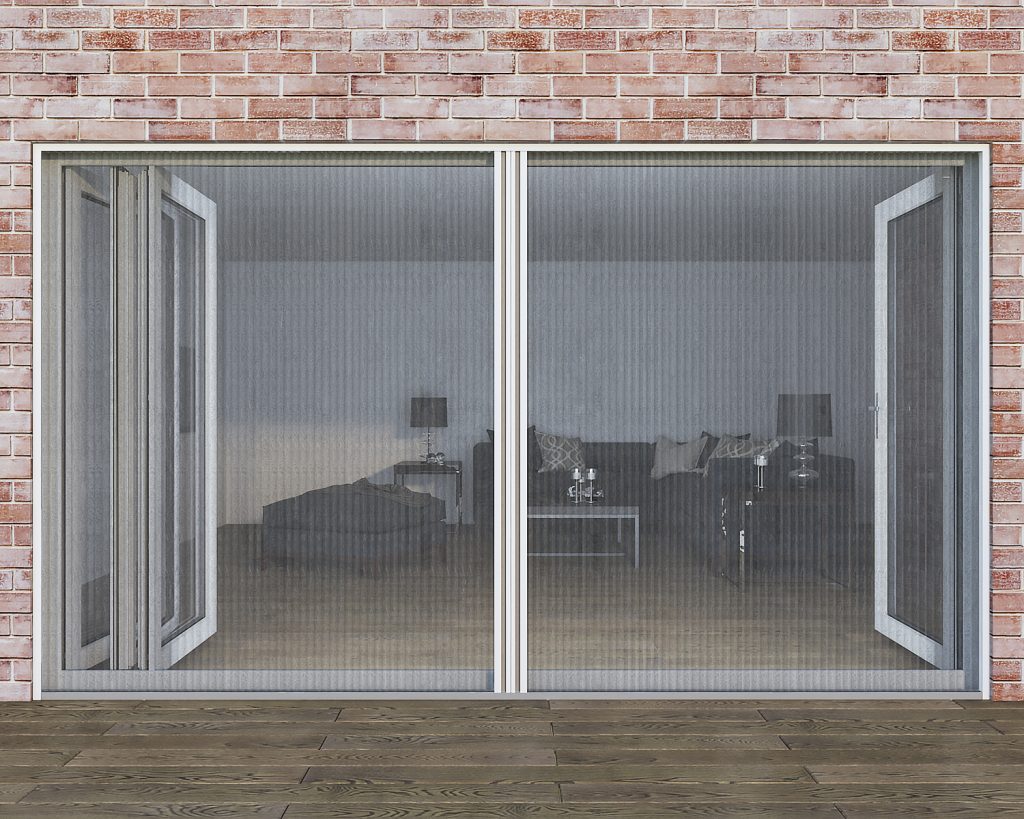
NOT EVERY MESH HANDLES COASTAL CONDITIONS THE SAME WAY
There isn't one insect screen material that is ideal for every Melbourne property. The right choice depends on where the screen is installed and how much exposure it receives.
Before choosing a window insect screen in Melbourne, consider:
- Distance from the coastline
- Exposure to salt-laden air
- Direct sunlight and UV exposure
- Wind exposure
- Required airflow
- Risk of impact or pet damage
- Expected maintenance requirements
The goal isn't necessarily to choose the strongest mesh available. It is to choose a material that provides the right balance between durability, airflow, visibility and cost.
FIBREGLASS INSECT MESH
Fibreglass is a popular option for standard residential insect screening because it is lightweight, affordable and allows good airflow.
It can work particularly well for:
- Sheltered residential properties
- Standard window openings
- Areas where ventilation is a priority
- Homeowners looking for a cost-effective solution
However, prolonged exposure to strong UV and coastal conditions can affect its service life compared with more durable mesh materials.
ALUMINIUM MESH
Aluminium mesh provides greater rigidity and impact resistance than standard fibreglass.
For a bug screen in Melbourne, aluminium can be a practical middle-ground where homeowners want additional durability without moving to a heavier stainless-steel system.
Its advantages include:
- Good structural strength
- Reasonable airflow
- Better resistance to everyday impact
- Suitability for many door applications
However, damaged protective finishes can increase the risk of corrosion, particularly in exposed coastal environments.
STAINLESS STEEL MESH
Stainless steel is generally selected where long-term durability and corrosion resistance are priorities.
It can be particularly useful for homes exposed to:
- Salt air
- Coastal winds
- Heavy weather exposure
- High levels of outdoor traffic
For window insect screens in Melbourne, stainless steel can provide a longer-lasting solution in exposed locations, although the higher material cost may not be necessary for every property.
PET-RESISTANT MESH
Standard insect mesh isn't designed to withstand repeated scratching from dogs or cats.
Pet-resistant mesh provides a stronger alternative for households where animals regularly push against, scratch or interact with screens.
The trade-off is that heavier mesh can affect visibility and airflow compared with lighter fibreglass options.
For households with pets, however, the additional durability can prevent repeated mesh replacement and make it a worthwhile investment.
MESH DURABILITY VS AIRFLOW
Choosing the strongest material isn't automatically the best decision.
A heavier mesh may provide greater impact resistance, but it can also affect airflow and visibility. Conversely, lightweight fibreglass provides excellent ventilation but may not be appropriate for high-impact applications.
QUICK COMPARISON
- Best for exposed coastal locations: Stainless steel
- Best budget option: Fibreglass
- Best for pets and impact: Pet-resistant mesh
- Balanced strength and airflow: Aluminium
- Best for maximum airflow: Standard fibreglass
The right choice depends on what the screen needs to withstand every day.
WHAT SHOULD YOU SPECIFY FOR A BAYSIDE HOME?
If your property is close to the water, exposure should be one of the first things discussed with your installer.
For highly exposed locations, stainless steel may provide better long-term durability for fixed windows, while aluminium can be suitable for some door applications where impact resistance is important.
If stainless steel is being considered, ask the installer about the appropriate grade and whether the fasteners and surrounding components are compatible with the coastal environment.
This last point is often overlooked. Using different metals together can create corrosion issues, particularly when the installation is regularly exposed to moisture and salt.
INSTALLATION MATTERS AS MUCH AS THE MESH
Even high-quality insect mesh can deteriorate prematurely if the surrounding frame and installation aren't suited to the environment.
Before installation, check:
- Frame material and finish
- Fastener type
- Mesh attachment method
- Drainage around the frame
- Seal condition
- Ease of future mesh replacement
A quality insect screen system should be designed as a complete installation rather than treating the mesh as an isolated component.
FREQUENTLY ASKED QUESTIONS
DOES STAINLESS STEEL ALWAYS SUIT COASTAL HOMES?
Not necessarily. It is an excellent option for exposed locations because of its corrosion resistance, but the appropriate specification depends on the property's exposure and the application.
IS FIBREGLASS MESH STILL WORTH CONSIDERING?
Absolutely. For sheltered properties further inland, fibreglass can provide an excellent combination of affordability, airflow and everyday insect protection.
WHICH MESH PROVIDES THE BEST AIRFLOW?
Standard fibreglass and lightweight aluminium generally provide very good airflow. Heavier pet-resistant and security-style meshes can restrict airflow more.
IS BUG SCREEN MELBOURNE DIFFERENT FROM INSECT MESH?
Usually not. Bug screen Melbourne is commonly used as another term for insect screening products designed to keep insects outside while allowing ventilation.
WHAT IS THE BEST MESH FOR PET OWNERS?
Pet-resistant mesh is generally the better choice where dogs or cats regularly scratch or push against screens. The exact product should still be selected according to the opening and ventilation requirements.
SHOULD COASTAL HOMES USE STAINLESS STEEL MESH?
For properties with significant salt-air exposure, stainless steel is worth considering because of its durability and corrosion resistance. A professional installer can assess whether the additional cost is justified for your particular location.
FINAL THOUGHTS
Choosing insect mesh by postcode isn't enough. Choosing it according to exposure, durability, airflow and how the screen will actually be used is far more effective.
Fibreglass may be ideal for a sheltered home, aluminium can provide a useful balance of strength and airflow, while stainless steel becomes increasingly attractive as coastal exposure increases.
Before replacing your insect screens, have the property and opening assessed so you can choose the right material rather than simply paying more for the strongest option.
Learn More:

No comments:
Post a Comment